Did you know that while selecting a solar system, the panel matters the most in terms of offering you the right efficiency? Well, the type of module indeed influences how much electricity it will generate, its long-term performance, the space needed and the overall economics related to it.
But between monocrystalline vs polycrystalline solar panels: Which one to choose? Struggling to find which one is the best for you? Well, both technologies use silicon photovoltaic cells to convert sun rays into electricity, but the manufacturing, energy level, and application may differ.
Wondering which one generates long-term ROI? If you are confused between the two, then here is a solar panel comparison guide, helping you make the right decision:
What Is a Monocrystalline Solar Panel?
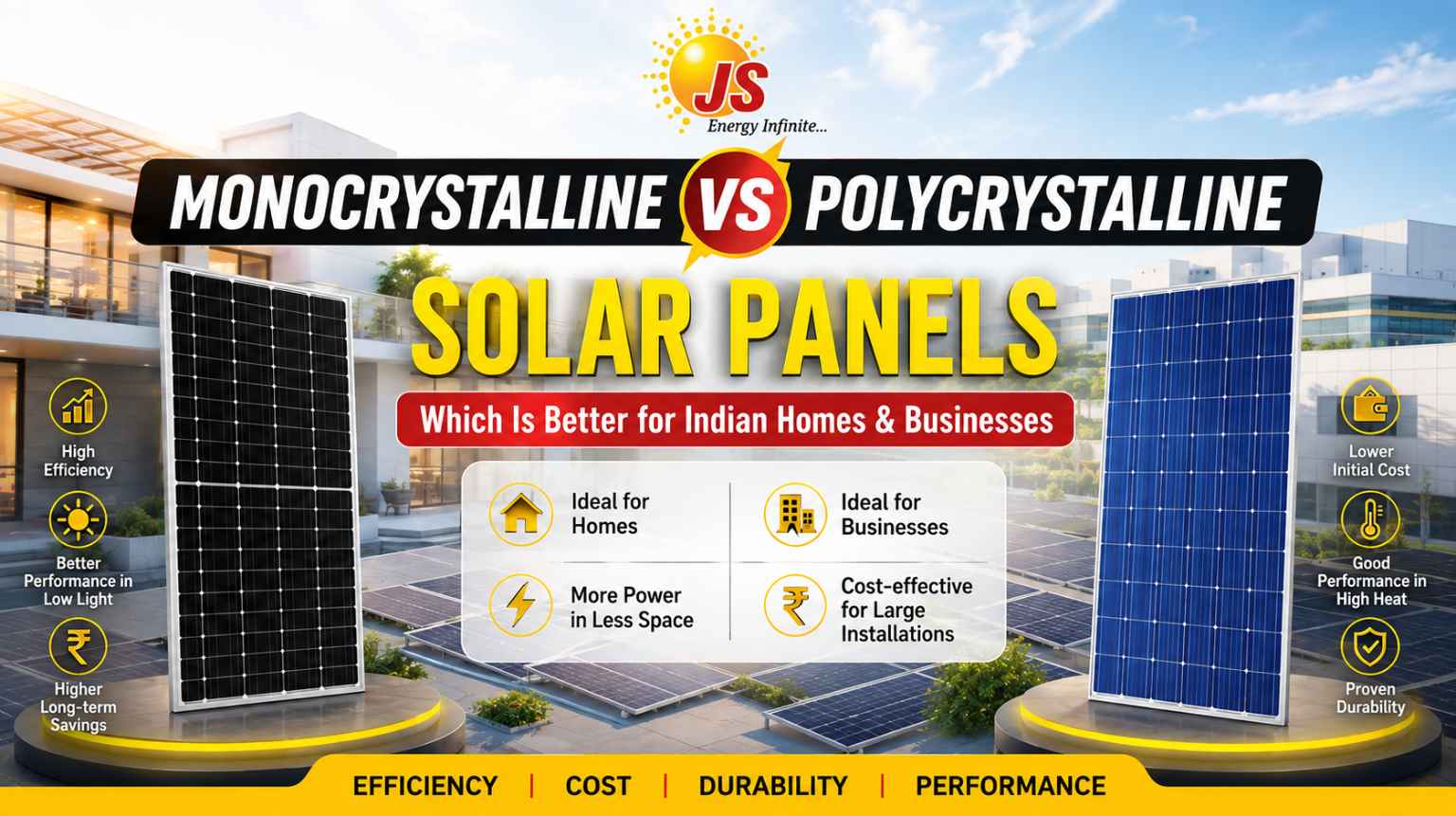
Before we know which is the best between mono vs poly solar panel, let’s learn about each in detail. A monocrystalline solar panel is a type of panel that is manufactured by using a single-crystal structure of silicon.
- The uniformity of the structure enables electrons to move efficiently throughout the material, which promotes efficiency in the module.
- These have a dark or black appearance and are ideal for residential, commercial, and utility-scale solar installations.
- One of the most significant benefits of these mono PERC solar panels is higher generation of power per unit of area.
What Is a Polycrystalline Solar Panel?
Polycrystalline solar panels, just like monocrystalline panels, are made from silicon. However, the cells in this panel are made using multiple silicon crystal structures.
- The panels are manufactured by allowing the molten silicon to cool and form multiple crystals.
- The appearance of these panels is blue or bluish.
- Polycrystalline solar panel efficiency is comparatively lower, but it is a practical option for those with ample ground and roof space.
- One of the most significant benefits of these panels is cost-effectiveness.
You can read also:- Best Cleaning Methods for Solar Panels: Manual vs Robotic
Monocrystalline vs Polycrystalline — Head-to-Head Comparison Table
Let’s know about the major difference between monocrystalline and polycrystalline solar panel with the help of a table here:
| Factor | Monocrystalline | Polycrystalline |
| Efficiency | Generally higher | Generally lower |
| Cost per watt | Usually higher | Usually lower |
| Space required | Less | More |
| Heat performance | Depends on the specific module | Depends on the specific module |
| Lifespan | Around 25+ years | Around 25 years |
| Degradation | Generally slower | Generally faster |
| Appearance | Dark/black | Blue |
Performance in Indian Climate Conditions
Which one is high efficiency solar panels India? Which one is ideal for Indian weather between monocrystalline and polycrystalline solar panels?
Both types of panels are used in different climate conditions of India. The performance of the panels depends on factors such as:
Heat- High temperature can lead to a reduction in the panel’s power output. Make sure to check the module’s temperature coefficient.
Dust- Dirt and dust can decrease the efficiency by preventing sunlight from reaching the cells. Ensuring regular cleaning is essential.
Humidity: Areas with humidity require much attention to the quality of the module, construction, as well as resistance to corrosion.
Apart from that, location and installation also play an important role in the overall performance of the solar panels. Make sure to compare both the solar panel types in India in terms of technical specifications and select the one that aligns with your area’s needs.
Cost vs ROI: Which Pays Back Faster in India?
Monocrystalline vs Polycrystalline- which is the best solar panel type for home India? Which one is cost-effective in the long term? Well, let’s learn about it here:
Monocrystalline panels:
- These are known for offering higher efficiency and can generate more energy output even from a limited roof space.
- The initial investment of installing these panels is higher.
- These are known for offering long-term output and ROI and are ideal for those with limited space.
Polycrystalline panels:
- These panels are considered affordable with an initial low-cost investment.
- The panels are ideal for projects that have plenty of space, as they require more space for the same capacity.
- These are best for projects looking for affordable solar installation.
The overall ROI depends on the type of project. Make sure to consider your requirements and compare overall price, energy generation, and space needed to find the best option for you.
You can read also:- Commercial Rooftop Solar Benefits: Why Smart Business Owners Are Switching in 2026
Which One Should You Choose?
Monocrystalline vs polycrystalline solar panels- which one to choose? If you are still not sure which one is ideal for you, then before opting for any panel, make sure to choose the one after considering these points:
For home rooftops: If the roof space is usually limited and requires a panel that offers high efficiency. The ideal solution for such rooftops is monocrystalline panels.
For commercial and industrial projects: Commercial and industrial projects require a high-energy-generating system. Make sure to check the available installation area, energy required and efficiency to get better ROI.
For space-constrained sites: For a small area, it is best to go for high efficiency monocrystalline panels that generate high energy.
For budget-focused projects: If you’re looking for a budget-focused installation, then go for polycrystalline panels that are ideal for projects with ample space.
Bonus: Where Do Bifacial Panels Fit In?
Which one to choose-bifacial solar panel vs monocrystalline? Bifacial solar panels are a viable option in comparison to other modern solar technologies. These are known to generate electricity from sunlight on both the rear and front sides of the module.
- This type of installation enables light to reach both the rear side and the front of the panels, along with a mounting structure that provides better clearance.
- The overall structure and surrounding surface help in reflecting the sunlight towards the rear of the module.
- It provides added rear-side energy generation.
It is not just an alternative to monocrystalline panels, but a much better option that provides high-efficiency solar solutions.
Why Choose JS Solartech for High-Efficiency Solar Modules
Wondering where to find reliable solar solutions along with affordable poly or monocrystalline solar panel price in India? JS Solartech is the one you can count on to provide high-quality products with high efficiency and long-term performance.
- We offer our customers solar components for different projects and needs. We provide:
- Solar modules that generate efficient power as per the project needs.
- A wide range of solar solutions for commercial, residential, and industrial projects.
- Complete solar solutions with modules, inverters, and essential solar components.
We offer complete solutions from rooftop installations to large solar projects, ensuring that your switch to green energy is seamless.
Conclusion
When selecting between monocrystalline vs polycrystalline solar panels, make sure to consider factors such as energy generation requirements, budget, available space, and expected ROI to find the one that is ideal for you.
Apart from that, it is also important to find a dependable solar partner that can help you make the right decision based on your solar needs.
In search of a trusted and reliable supplier to make a worthy investment in solar energy? Get in touch with JS Solartech and be sure to get a custom quote while experiencing flawless solar solutions.
FAQs
Q1. Which is better, monocrystalline or polycrystalline solar panels?
While selecting between monocrystalline vs polycrystalline solar panels, it is important to know about your budget, location and roof space. Monocrystalline panels are best in terms of efficiency and perform better in limited space, while Polycrystalline panels are ideal for those who have an abundance of space and require something that is budget-friendly.
Q2. What is the price difference between monocrystalline and polycrystalline solar panels in India?
The overall difference in monocrystalline solar panel price in India is about 10 to 20%. Monocrystalline panels are comparatively more expensive than polycrystalline panels. However, the overall price gap has reduced significantly due to mono PERC technology.
Q3. Do monocrystalline panels last longer than polycrystalline panels?
In comparison to mono vs poly solar panel, monocrystalline panels degrade slower, offering maximum output over the lifespan of 25 years.
Q4. Which solar panel type works best in hot Indian summers?
Monocrystalline panels are high efficiency solar panels India, even for high-temperature climates, as they have a better temperature coefficient. These panels are ideal for most of the Indian regions.
Q5. Are polycrystalline solar panels still worth buying in 2026?
Polycrystalline solar panel efficiency is suitable for large projects with a low budget and an abundance of space. Even though the price of mono PERC has dropped significantly, these panels are still worth investing in for larger projects.